Skip to content

THE PRACTICAL GUIDES

Practical AI for Business & IT

Artificial intelligence is useful when it helps someone finish a real task and the result can be checked. For a small business, that might mean drafting a customer response or documenting a procedure. For an IT team, it might mean organizing logs or reviewing a script. This hub connects those everyday uses with the access, evidence and ownership needed to use them responsibly.

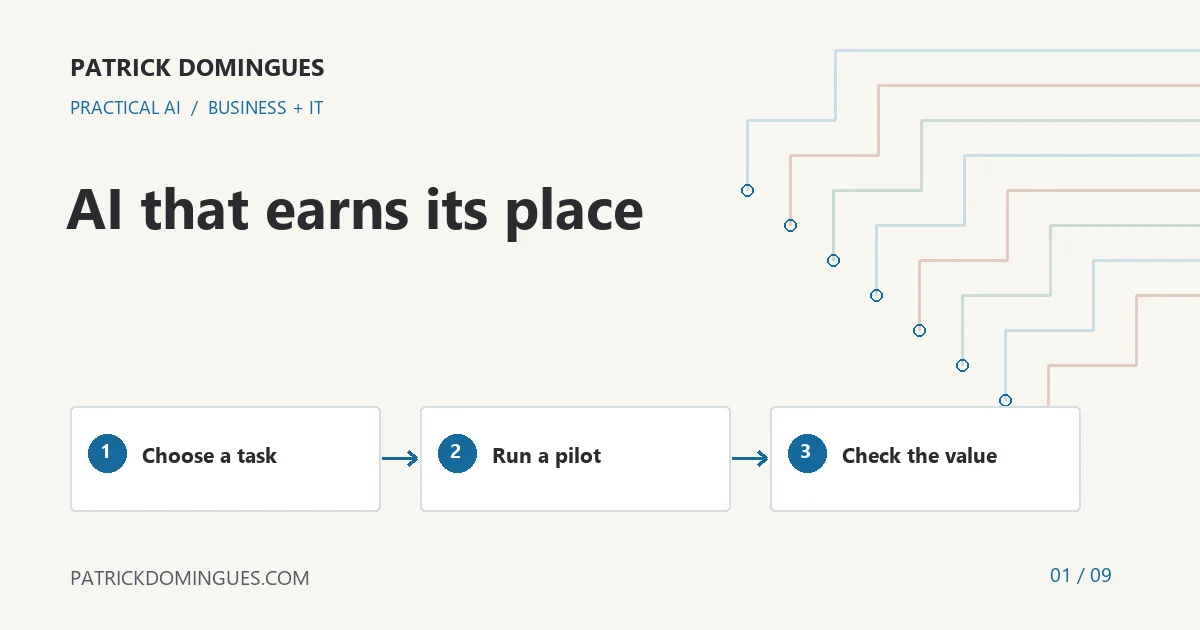
Start with the work rather than the product. Choose one task, identify its approved information source, name a reviewer and decide what a mistake would cost. Use the worked examples below with synthetic or explicitly approved data first. Some guides are written for owners and managers; others need an administrator or support provider. You do not need to automate a whole department or connect every business system to learn whether a small AI-assisted workflow is worthwhile.

Start here

Worked examples use synthetic data or explicitly scoped test fixtures. Review the chosen product, account type, data permissions and output before real business use. Illustrative outputs are not model benchmarks or a promise of savings.

Start with useful business workflows

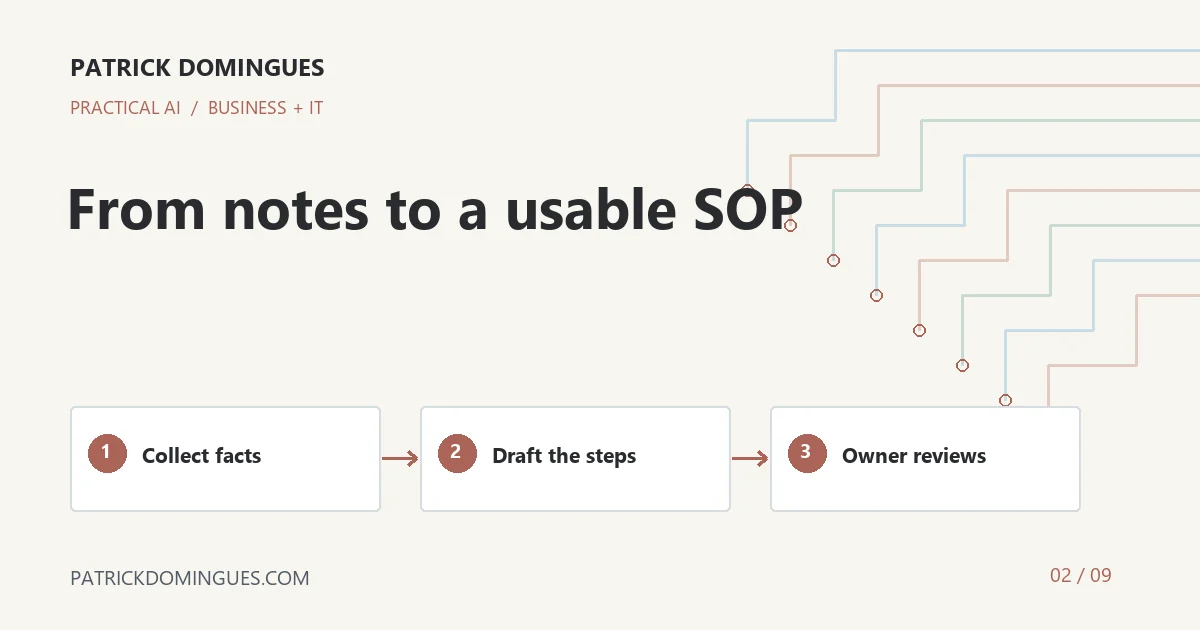
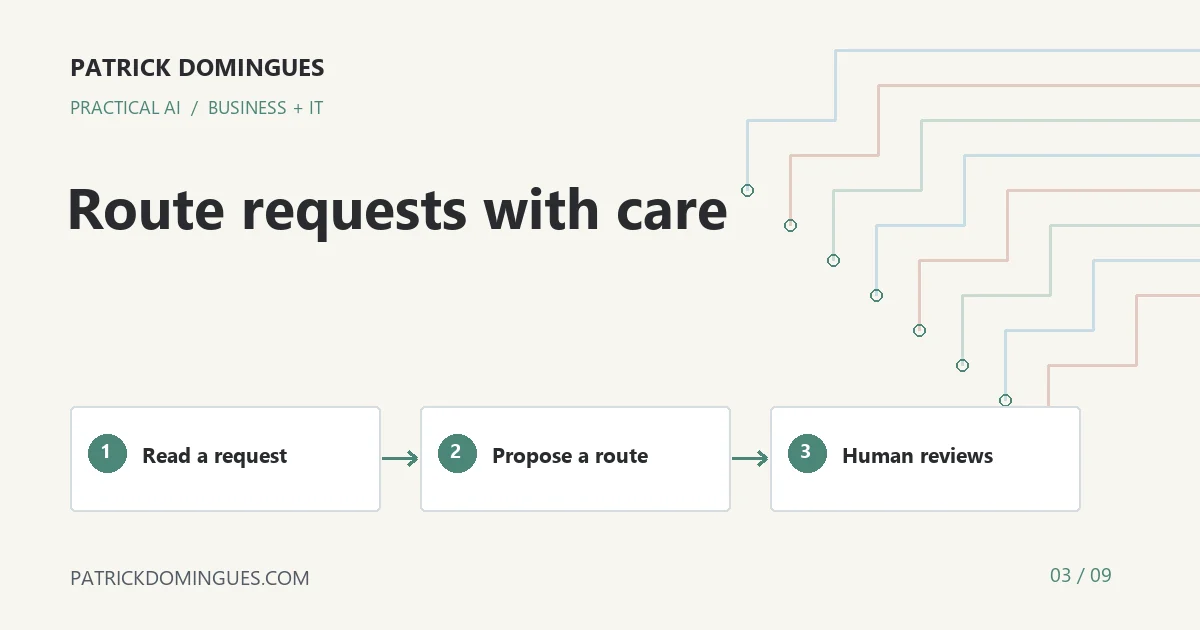
Explore tasks that an owner, manager or operations team can recognize: deciding where AI might help, turning rough notes into a usable procedure, and routing customer or support requests to the right person. Each guide includes a bounded example, questions to resolve and checks before the output is used. Keep policy decisions, refunds, payments and sensitive communications with the responsible people. Measure review and correction time alongside drafting time so a polished demonstration is not mistaken for a proven business benefit.

Build and manage the technical foundation

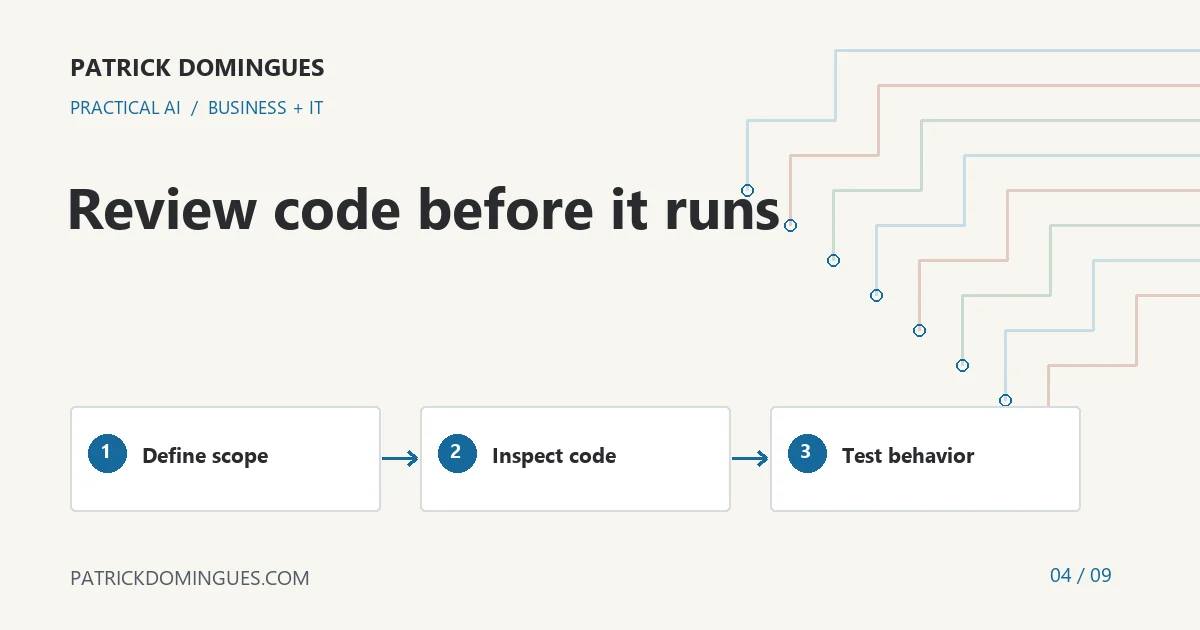
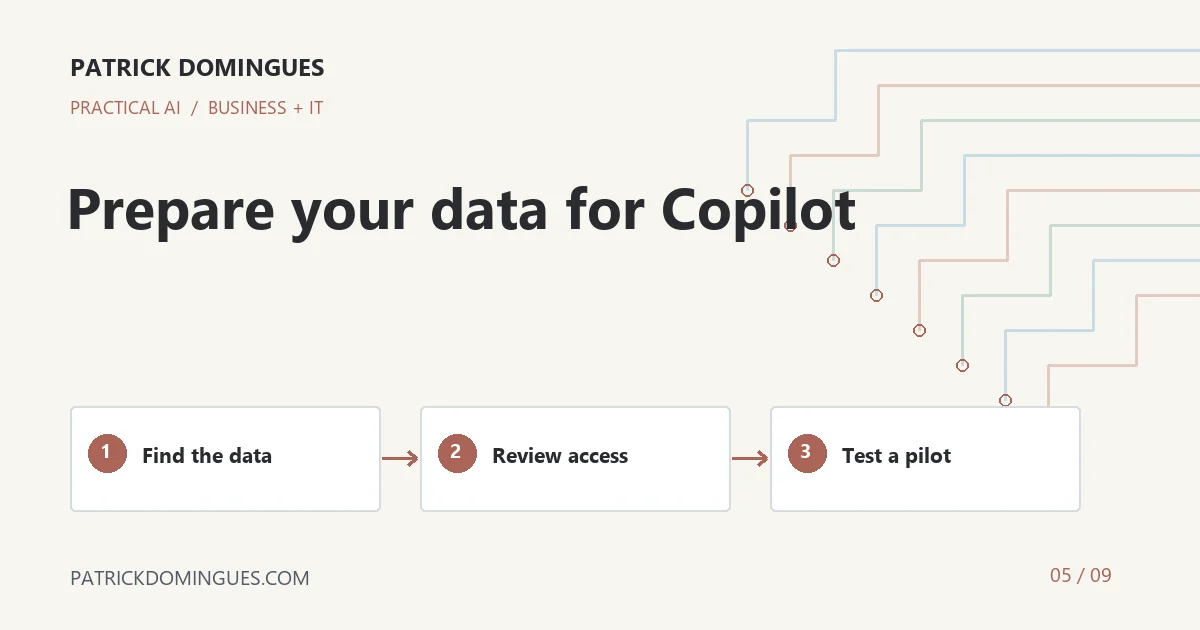
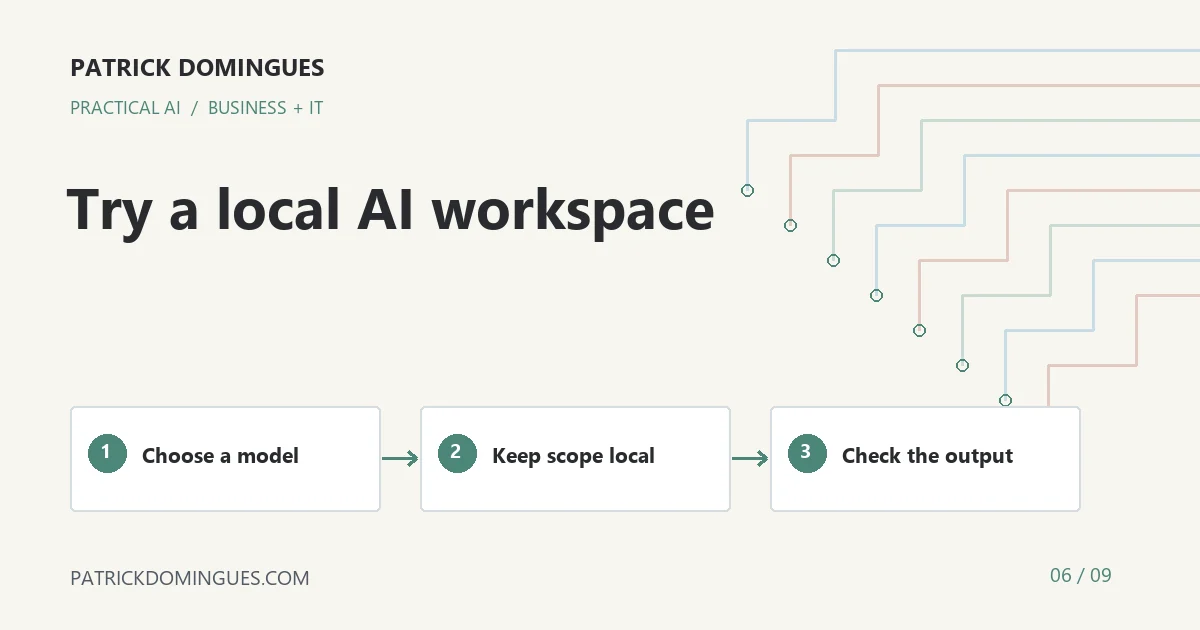
Use these guides with the person responsible for devices, accounts and business data. Review generated PowerShell before execution, check Microsoft 365 permissions before a Copilot pilot, or try a small local-model experiment on an appropriate lab device. A product's privacy statement, a local installation or a script that parses is only one part of the assessment. Confirm the actual configuration, permissions, operating environment and expected result. These are focused starting points for learning and verification, not permission to make unreviewed changes across a live environment.

Verify evidence and keep control of the risks

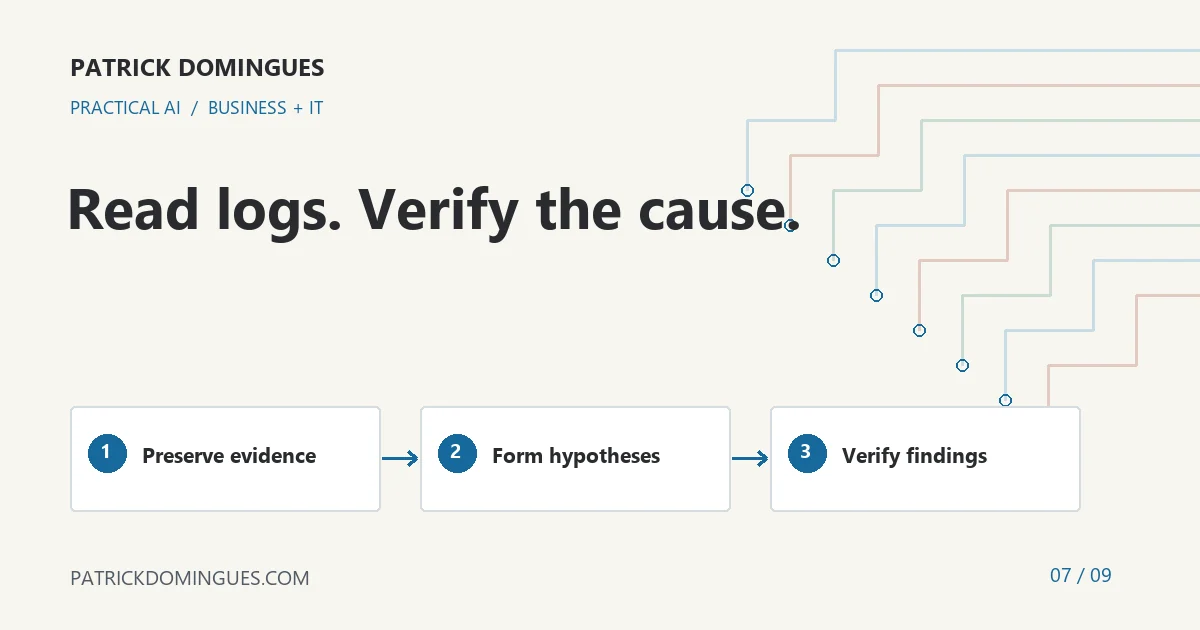
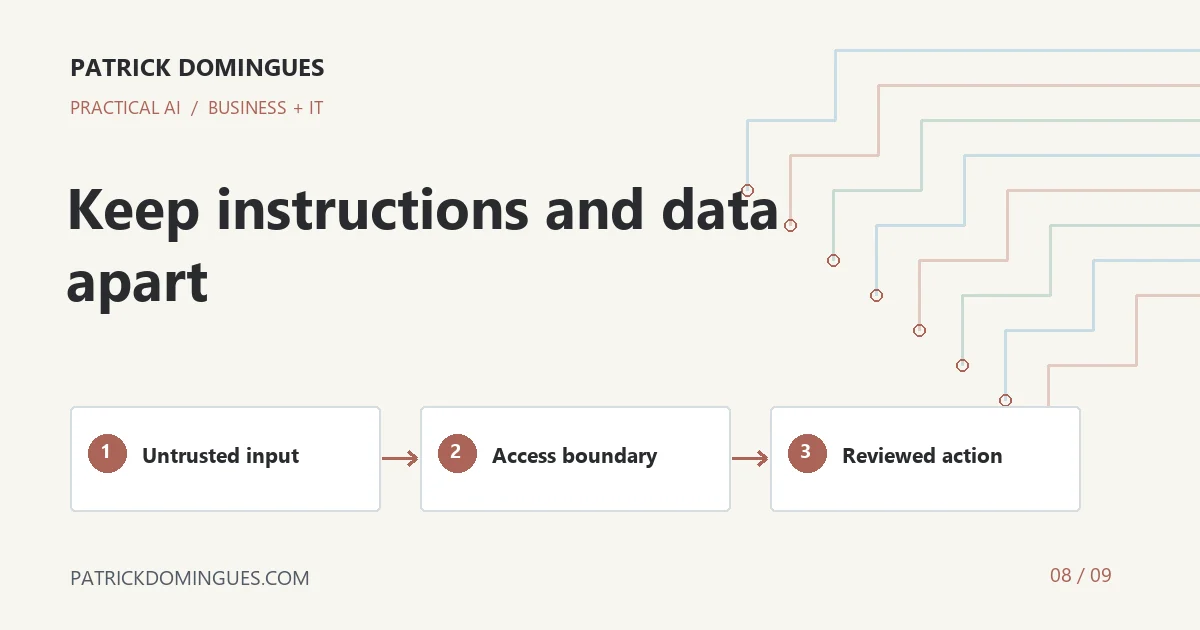
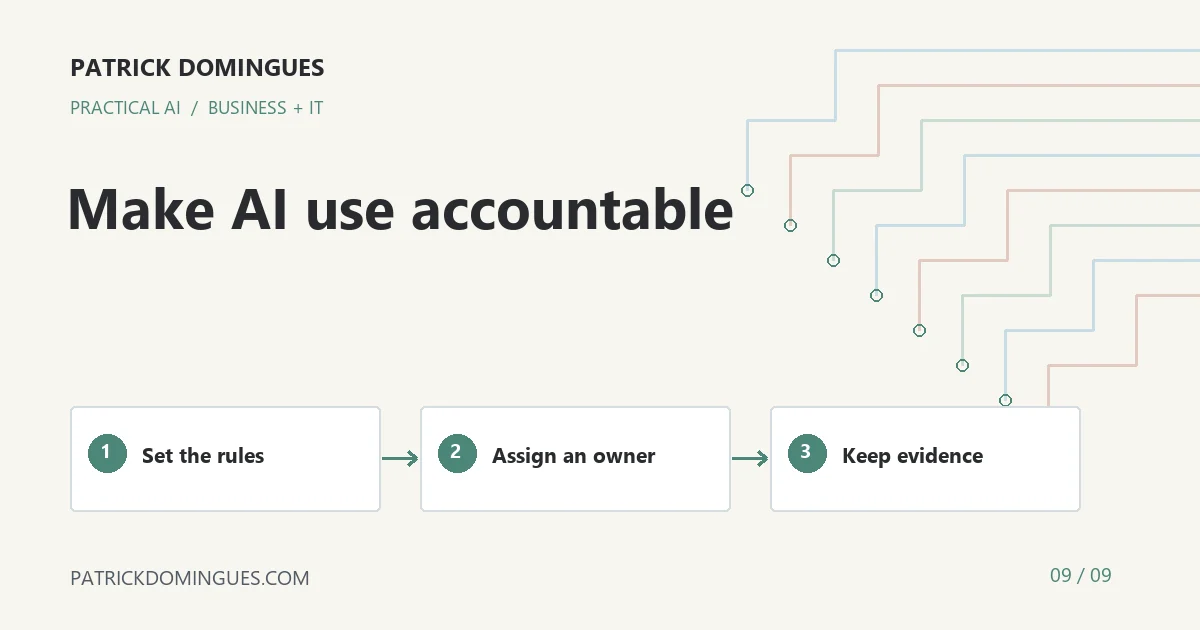
Useful AI output still needs a source and an accountable decision. Work through a synthetic log extract to separate observations from hypotheses, see why an instruction inside an external document does not authorize a business action, and customize a short acceptable use policy. Keep human approval and application authorization outside the model where they belong. Decide who can pause a workflow, how staff report unexpected behavior and which evidence should be retained without unnecessarily copying sensitive information into more places.

Latest in this topic

Recent articles from this topic, ordered by publication date. This selection updates automatically as new matching guides are published.